Hot air welding technology utilizes specialized hot air welding machines that deliver controlled heated air at temperatures ranging from 700°F to 1,350°F combined with targeted pressure to create molecular bonds between thermoplastic materials. These advanced machines are central to the hot air welding technology process, enabling the formation of airtight, waterproof seams that often exceed the strength of the parent material itself.
This technology provides a comprehensive solution for thermoplastic joining, featuring various machine types and automation levels tailored to industry needs. Designed for professionals like manufacturing engineers and contractors, hot air welding machines improve production efficiency, weld quality, and long-term durability. Proper machine selection is essential to avoid issues such as inconsistent seam width, human error, and reduced product quality.
Puntos clave sobre las máquinas y la tecnología de soldadura por aire caliente
- El control preciso de los ajustes de temperatura, presión y velocidad es esencial para conseguir soldaduras resistentes y uniformes en materiales termoplásticos.
- Existen diversos tipos de máquinas —desde las manuales hasta las totalmente automáticas— que ofrecen prestaciones adaptadas a los distintos volúmenes de producción y necesidades de aplicación.
- La automatización mejora la eficiencia de la soldadura, reduce los errores humanos y garantiza una calidad uniforme de las juntas para un rendimiento a largo plazo.
- La selección y el mantenimiento adecuados de la maquinaria son fundamentales para conseguir uniones fiables, duraderas y herméticas en diversas aplicaciones industriales.
¿Qué es la soldadura por aire caliente?
Hot air welding machines are precision equipment that create molecular bonds in thermoplastic materials through controlled application of heat and pressure. This welding process fundamentally differs from traditional metal welding by using heated air rather than electric arcs to achieve material bonding.
The core process involves directing a stream of heated air to the interface between two pieces of thermoplastic material. This heat softens the material surfaces until their molecular structure becomes mobile. Pressure rollers or manual application then compresses these softened surfaces together, creating bonds that form an airtight, waterproof seam.
This technology matters because it produces professional results without adhesives, solvents, or mechanical fasteners. The resulting joints demonstrate superior durability and can withstand demanding environmental conditions across many applications. For a step-by-step look at the process, see our guide to how hot air welding works.
Componentes principales y funcionamiento
Los elementos calefactores permiten un control preciso de la temperatura, algo esencial para lograr soldaduras uniformes en diferentes materiales y con distintos espesores. Los sistemas de suministro de aire incorporan mecanismos de aire comprimido que dirigen el aire caliente a través de boquillas especializadas para una aplicación precisa. Los mecanismos de aplicación de presión incluyen rodillos motorizados o herramientas manuales que garantizan un contacto uniforme durante el proceso de soldadura.
Estos componentes funcionan conjuntamente para lograr el control preciso de la temperatura y la presión, fundamental para obtener soldaduras de calidad. Las máquinas modernas cuentan con controles digitales que eliminan las conjeturas y reducen el error humano a la hora de alcanzar los parámetros óptimos de soldadura.
Sistemas de control de temperatura y presión
Advanced control systems feature programmable settings that store optimized parameters for different thermoplastic materials including polyurethane, PVC, and TPO membranes. Temperature monitoring ensures consistent heat application while pressure regulation maintains uniform seam formation.
Automatic welders with digital controls can achieve efficiency levels impossible with purely manual processes while maintaining the ability to adjust parameters for specific manufacturing requirements.
Tipos de máquinas de soldadura por aire caliente
Sopletes de aire caliente portátiles
Handheld hot air welders are portable tools with variable temperature and airflow controls for detail work, field repairs, complex geometries and tight spaces. Miller Weldmaster’s EliteAir Industrial hot air welder weighs 2.4 lb (1.1 kg), reaches up to 1,202°F (650°C) and runs on 120–220 VAC for in-house or in-the-field repairs of industrial fabrics such as tarps, signs, inflatables, geomembranes and tension structures.
Manual hot air welders excel in applications requiring operator precision and flexibility. Their portability makes them ideal for on-site installation work and repair jobs where larger equipment cannot reach. However, the manual process requires skilled workers to maintain consistent speed and pressure for uniform results.
Sistemas de soldadura semiautomáticos
These systems combine motorized movement with operator control, delivering consistent speed settings while maintaining manual oversight capabilities. The automation eliminates inconsistencies in travel speed while allowing workers to adjust pressure and monitor weld quality in real-time.
Unlike handheld units, semi-automatic machines provide enhanced consistency through mechanized movement control. This approach benefits medium-volume production requiring a balance of flexibility and repeatability without the complexity of fully automated systems.
Miller Weldmaster’s entry-level machines weld at 8–14 m/min; its standard full-size machines store recipes for quick setting recall and weld at up to 35 m/min. The T300 Flex, its most universal welder, combines hot air and hot wedge welding with an array of seam types at up to 30 m/min (100 ft/min).
Máquinas de soldadura automática
Fully automated systems feature programmable controls and high production efficiency. These purpose built machines store welding recipes for different materials and automatically adjust temperature, pressure, and speed settings.
Mass manufacturing applications benefit from reduced operator error and precise temperature and alignment control. The automation level achieves consistent seam width and eliminates variations that can lead to quality issues in high-volume production.
Miller Weldmaster’s automated welding machines are custom built. They can weld multiple rolls of material at once and combine welding with gluing, sewing, grommeting, printing, visual inspection and cutting, controlled from a PLC touch screen with recipe storage; the Moduline System, for example, automates tarp and cover production. Miller Weldmaster reports that most of its automation customers see a return on investment in under two years.
Equipo especializado
Some hot air welders are built for one product family. Miller Weldmaster’s specialized machines include the TG3600 for geomembrane liners and covers, the FX100 for flexible reinforced ducting and tubing, the BT2000 for flexible storage tanks and bladders, the HG50 banner finishing machine, which welds, grommets and cuts in a single station, and the Calibration Tube System for cured-in-place pipe. These specialized systems address specific industry requirements that general-purpose machines cannot efficiently handle.
Aplicaciones industriales y guía para la selección de máquinas de soldadura por aire caliente
Building on the machine types available, successful implementation requires aligning each machine’s capabilities with the specific demands of your production environment. This includes evaluating how well the equipment supports your materials, workflow, and workplace conditions to ensure long-term performance.
Paso a paso: proceso de selección de una máquina de soldadura por aire caliente
Step 1 — Material Compatibility Assessment
Identifique los tipos de termoplásticos, los rangos de espesor y los requisitos de temperatura de sus materiales. Realice pruebas de soldadura con diferentes ajustes de temperatura para garantizar la compatibilidad antes de decidirse a adquirir el equipo.
Step 2 — Production Volume Analysis
Determine si los sistemas manuales, semiautomáticos o automáticos se adaptan mejor a sus necesidades de rendimiento en la fabricación. Tenga en cuenta tanto la capacidad actual como las necesidades de expansión futuras.
Step 3 — Workplace Requirements Evaluation
Evalúa las necesidades de portabilidad, el suministro eléctrico disponible, el acceso a aire comprimido y las limitaciones del espacio de trabajo. Ten en cuenta los requisitos de seguridad y la capacidad de formación de los operarios de tu equipo.
Step 4 — Feature Prioritization
Seleccione los controles esenciales, las opciones de boquillas y el nivel de automatización en función de sus estándares de calidad y sus objetivos de eficiencia. Tenga en cuenta la asistencia técnica y la disponibilidad de piezas de repuesto que ofrecen los fabricantes.
Comparación de máquinas de soldadura por aire caliente: sistemas manuales frente a sistemas automáticos
La elección entre sistemas manuales y automáticos depende de los requisitos de volumen de producción y de las necesidades de uniformidad en la calidad. Los sistemas manuales ofrecen flexibilidad y unos costes iniciales más bajos, pero requieren operarios cualificados para lograr resultados profesionales. Los sistemas automáticos ofrecen una eficiencia superior y eliminan el error humano, pero requieren una mayor inversión de capital y un mantenimiento continuo.
Incluso cuando se elige el equipo adecuado, los operarios se enfrentan con frecuencia a dificultades que afectan a la calidad de la soldadura y a la eficiencia de la producción.
| Característica | Proceso manual | Soldadores automáticos |
| Velocidad de producción | Depends on the operator | Up to 35 m/min (115 ft/min) on Miller Weldmaster full-size machines |
| Inversión inicial | Lowest (handheld tools) | Higher; fully automated systems are custom built |
| Se requiere experiencia como operador | Se requiere un alto nivel de experiencia | Formación básica suficiente |
| Coherencia | Variable, depende de la cualificación del trabajador | Resultados uniformes gracias a los controles digitales |
| Necesidades de mantenimiento | Limpieza mínima y básica | Regular calibration and component replacement |
Retos habituales y soluciones en el proceso de soldadura por aire caliente
Comprender los problemas operativos habituales ayuda a mantener una calidad constante y a optimizar el rendimiento de los equipos a lo largo de todo el proceso de fabricación.
Reto 1: Calidad irregular de las soldaduras
Solución: Implemente controles digitales de temperatura con ajustes memorizables y establezca programas completos de formación para su equipo.
Los procedimientos de calibración deben realizarse con regularidad para garantizar la precisión de la temperatura, mientras que los protocolos de control de calidad ayudan a identificar desviaciones antes de que afecten a la producción. El establecimiento de procedimientos de soldadura estandarizados reduce la variabilidad y mejora la calidad general entre los distintos operarios y turnos.
Reto 2: Problemas de compatibilidad de materiales
Solución: Compruebe los rangos de temperatura de los materiales termoplásticos específicos, seleccione las boquillas adecuadas para el espesor del material y realice soldaduras de prueba antes de iniciar las series de producción completas.
Las especificaciones de los materiales varían considerablemente entre los distintos fabricantes, lo que requiere la validación de los parámetros de soldadura para cada nuevo proveedor de material. Las tablas de compatibilidad sirven de guía para los ajustes iniciales de temperatura, pero las soldaduras de prueba reales proporcionan la verificación más fiable de los parámetros óptimos.
Reto 3: Mantenimiento de los equipos y tiempos de inactividad
Solución: Establecer programas de mantenimiento preventivo y mantener un stock adecuado de piezas de repuesto para minimizar las interrupciones en la producción.
Los procedimientos de limpieza periódicos evitan la acumulación de residuos que pueden afectar a la transferencia de calor y al flujo de aire. Los programas de sustitución de componentes basados en las horas de uso ayudan a evitar fallos inesperados que pueden provocar costosos paros y retrasos en los plazos de entrega.
Casos de uso de las máquinas y la tecnología de soldadura por aire caliente
Hot air welding machines and hot air welding technology play a vital role across a wide range of industries and product applications where strong, durable, and airtight seams are essential. Their ability to create seamless bonds in thermoplastic materials makes them ideal for manufacturing products that require high performance and long-term durability. Whether in factory settings or on-site installations, these machines provide efficient and reliable solutions for joining sheets, membranes, and coated fabrics.
Common applications include industrial fabric fabrication, roofing membrane installation, and the production of inflatables and tarpaulins. The versatility of hot air welding technology allows it to accommodate various material thicknesses and seam widths, making it suitable for both small detail work and large-scale manufacturing processes. Additionally, portable hot air welders enable field repairs and maintenance, extending the usability of products and reducing downtime.
Casos prácticos
- Lonas, cubiertas y cortinas laterales para camiones
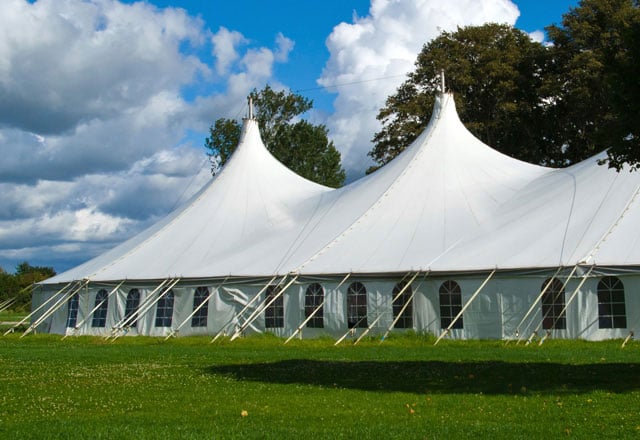
- Tents, shelters, structures and clear span buildings
- Banners, signs and billboards
- Awnings, shades, tension structures and pergolas
- Cubiertas para piscinas y piscinas
- Geomembrane liners and roofing membranes
- Flexible storage tanks and bladders
- Flexible ducting and tubes
- Inflatables, evacuation slides and containment booms
- Cured-in-place pipe and filtration tubes
- Agricultural and gym curtains, roller doors, mattresses and athletic mats
- On-site repairs with handheld welders
Elige Miller Weldmaster tus necesidades de máquinas de soldadura por aire caliente
Las máquinas de soldadura por aire caliente de Miller Weldmaster soluciones versátiles para aplicaciones de unión de termoplásticos, siempre que se elijan y utilicen correctamente. La tecnología avanzada Miller Weldmasterofrece ventajas significativas a la hora de crear uniones duraderas y herméticas sin necesidad de adhesivos ni disolventes, lo que la convierte en una herramienta imprescindible para los sectores que requieren un rendimiento fiable en las uniones.
Cómo empezar a utilizar Miller Weldmaster
- Step 1: Define Your Requirements
Assess your material requirements and production volume needs with Miller Weldmaster’s expert guidance. - Step 2: Evaluate Your Workspace
Evaluate workspace constraints and automation benefits tailored to your application by Miller Weldmaster specialists. - Step 3: Connect with an Expert
Contact Miller Weldmaster equipment experts to discuss specific machine capabilities, request demonstrations, and receive personalized support to optimize your welding process.

 SABER MÁS