
About Sign Finishing & Banner Welding Machines
Sign finishing and banner welding machines are industrial equipment that seal, hem, and edge-finish printed vinyl banners, billboards, and large-format signs using heat — producing stronger, more durable results than sewing or tape. Whether you run a small sign shop finishing a few hundred banners a month or a large-format production facility handling billboards and trade show displays, the right finishing machine determines the quality, speed, and profitability of everything that leaves your floor.
This guide covers everything a sign shop or print provider needs to make a confident equipment decision: how the different welding methods compare, which machine fits which production volume, what the ROI looks like, and how Miller Weldmaster's equipment performs across the full range of sign finishing applications.
Principales conclusiones
- Welded banner seams outlast tape and sewing — they hold in wind, UV exposure, and repeated handling, making them the industry standard for commercial-grade outdoor signage.
- Sign finishing machines range from handheld hot air tools to fully automated production welders that can finish a 4 x 6 banner in under one minute.
- Hot air welding suits shops with varied material types; hot wedge welding delivers faster, more consistent output on high-volume straight-seam production runs.
- Founded in 1974, Miller Weldmaster serves sign shops and print providers with machines built specifically for banner finishing, silicone edge graphics, pole pockets, and billboard production.
What a Banner Welding Machine Saves
In Miller Weldmaster's own examples, a small shop finishing about 50 banners a week pays back the machine in roughly 9 to 14 months, and a mid-size shop finishing about 150 a week in roughly 4 to 8 months. After replacing manual sewing or banner tape with automated banner welding equipment, businesses typically experience faster production speeds, reduced labor requirements, improved consistency, and significant savings on consumable materials such as thread and adhesive tape, helping increase overall profitability. To estimate the payback for your own shop, see our guide: is a banner welding machine worth it?
What Is Sign Finishing?
Sign finishing is any process applied to a printed banner or sign after it leaves the printer to seal, strengthen, and prepare it for display. A freshly printed banner is essentially unfinished, with raw edges, no hanging system, and no weather protection. Finishing transforms it into a professional, durable, display-ready product.
Sign finishing encompasses various operations depending on the application, with the most common being hem welding or sewing to fold and bond the banner edges, preventing fraying, tearing, and delamination. Other key finishing steps include creating pole pockets—channels along the top or bottom that allow banners to slide onto poles for display—and inserting grommets, which are reinforced metal eyelets used for hanging.
Additional finishing techniques include silicone edge graphics (SEG) finishing, which attaches a silicone bead around fabric graphics for a clean, tensioned display; lamination to protect against UV fading and moisture; and mounting the print to rigid backings for stability. Among these, hem welding is particularly critical as it directly impacts a banner’s durability outdoors, its resistance to wind, and overall customer satisfaction. Poor hem finishing is a common cause of banner failures in the field.
Why Sign Finishing Quality Determines Product Lifespan
A banner can be printed on premium media with accurate color and sharp resolution — and still fail within a few weeks if the finishing is poor. Edge failures are the most common complaint sign shops receive from end customers. Tape-applied hems peel under UV and moisture exposure. Poorly sewn hems unravel under sustained wind load. Both failures result in the same outcome: a returned banner, a reprint, and a damaged customer relationship.
Welded hems eliminate these failure points. A properly welded seam fuses the thermoplastic layers of the banner material into a single, permanent bond. There is no adhesive to fail in heat, no thread to unravel under tension. Sign shops that switch from tape or sewing to welding consistently report lower return rates and higher customer satisfaction.
What Is a Banner Welding Machine?
A banner welding machine is industrial equipment that uses heat — typically through hot air, hot wedge, or radio frequency methods — to fuse the edges of vinyl or coated fabric banners together, creating a durable, watertight seam without thread or adhesive. The heat softens the thermoplastic material; rollers apply controlled pressure to bond the layers permanently. When the seam cools, the bond is set.
Banner welding machines are available in formats ranging from compact handheld tools for low-volume or on-site finishing to fully automated feed-through systems that process banners at production speed with minimal operator involvement. The right format depends on your output volume, material types, and level of labor you want to invest per banner.
How the Heat-Welding Process Works
The mechanics of banner welding are straightforward. Heat is applied to both material layers simultaneously — either through a stream of hot air, a heated metal wedge drawn between the layers, or electromagnetic energy in the case of radio frequency welding. The heat raises the surface temperature of the thermoplastic coating to its welding range, making it temporarily pliable. A set of pressure rollers then presses the two softened layers together. As the material exits the welding zone and cools, the bond sets permanently.
The key variable in any welding application is matching the heat, speed, and pressure to the material being welded. Too much heat burns or distorts the material. Stable operation matters because uncontrolled high temperatures can damage both the material and machine components if heat is not managed properly. Too little heat produces a weak bond. Automated banner welding machines maintain consistent parameters across the full length of a seam, improving efficiency on long production runs — something handheld tools and manual processes cannot guarantee.
One important boundary: banner welding only works on thermoplastic materials — those with a PVC, polyurethane, or other heat-fusible coating. Materials without a thermoplastic component, such as untreated woven fabrics or non-woven polyester, cannot be heat-welded and must be finished on an automatic industrial sewing machine.
Welding, Sewing or Tape: A Quick Comparison
Here is how the three finishing methods compare per banner. Our banner welding vs sewing guide covers the trade-offs in detail.
| Método de acabado | Seam Durability | Speed Per Banner | Mejor para | Weakness |
|---|---|---|---|---|
| Hot wedge / hot air welding | Highest — thermoplastic bond, waterproof, no consumables to fail | 1–3 min (automated) | High-volume vinyl banner production, outdoor signage, pole banners | Requires thermoplastic material; initial equipment investment |
| Sewing (industrial) | High — strong thread-based seam; can incorporate webbing and hardware | 4–7 min | Applications requiring webbing, D-rings, rope inserts, or mesh finishing | Thread breakage, puckering, skill-dependent; slower per-banner |
| Hem tape (double-sided) | Low to medium — adhesives used in taping, including banner tape, are useful for quick finishing but fail under sustained UV and moisture | 6–10 min (handling) | Very low-volume, temporary installations, quick-turn prototypes | Edge failures common outdoors; recurring consumable cost; not suitable for long-term display |
| Tape (single-sided PowerTape) | Medium — stronger than standard tape; no folding required | 3–5 min | Low-volume shops not yet ready for equipment investment | Still inferior to welding for outdoor durability; ongoing consumable cost |
Types of Banner Welding Machines
Hot Air, Hot Wedge, RF, Impulse, and Sewing
Sign finishing machines fall into five categories based on the heating method they use. Each method has distinct performance characteristics, material requirements, and ideal production scenarios. Choosing the right one depends on your materials, volume, and output types — not just price.
Máquinas de soldadura por aire caliente
Hot air welding uses a precisely controlled stream of heated air to soften the thermoplastic surface of both material layers before a set of pressure rollers bonds them together. It is the most versatile welding method for sign finishing — capable of processing a wide range of vinyl weights, mesh materials, and coated fabrics at various thicknesses.
Hot air welding is the preferred method for shops that run mixed material types across jobs. Because heat output and speed are independently adjustable, operators can dial in parameters for 13oz scrim vinyl on one job and 18oz blockout on the next without changing the machine configuration significantly. Miller Weldmaster's T300 Flex offers hot air and hot wedge welding on one machine.
Hot air welders are available in both automated table-mounted configurations and handheld formats. Handheld hot air tools are useful for on-site repair, small-batch finishing, and applications where a full production table is not practical.
Soldadoras de cuña caliente
Hot wedge welding uses a heated metal wedge that is drawn between two material layers at a controlled speed. The wedge heats both surfaces simultaneously before a set of pressure rollers bonds them. Because the heat is applied directly to the material contact surface rather than through air, hot wedge welding is faster and more energy-efficient than hot air for long, straight-seam production.
Hot wedge is the method of choice for high-volume sign shops running large quantities of the same material, especially large banners where long, straight seams are common. The consistent heat application produces tight, clean seams at production speeds that are difficult to match with hot air. Shops regularly producing large batches of standard vinyl banners — outdoor signage, retail POS displays, municipal pole banners — will see the highest output gains from hot wedge equipment.
Máquinas de soldadura por radiofrecuencia (RF)
Radio frequency (RF) welding uses electromagnetic energy to heat the thermoplastic material from the inside out rather than from the surface. The result is an exceptionally clean, uniform seam with no surface marking — critical for applications where the weld zone is visible and appearance matters.
RF welding is used for premium PVC banner applications, silicone edge graphics (SEG) channel work, and specialty sign applications where surface quality cannot be compromised. The RFlex is Miller Weldmaster's primary RF platform for sign finishing, and understanding how radio frequency welding works and its benefits helps determine when it is the right choice over hot air or hot wedge methods.
Important material boundary: RF welding only works on materials with a high PVC or dielectric content. It does not work on non-woven fabrics, untreated polyester, or materials without sufficient dielectric properties. If you finish these materials, RF is not the right solution — hot air or sewing is required instead.
Máquinas de soldadura por impulsos
Impulse welding uses a heated wire or bar that delivers a short, controlled burst of heat under pressure, then cools before the material is released. Unlike hot air and hot wedge welding, impulse welders do not require continuous heat — they operate in a cycle of heat, pressure, and cool. This makes them energy-efficient and well-suited for applications where heat must be carefully controlled.
Impulse welding suits shorter seams on lighter-weight materials and production environments where energy consumption is a priority. Miller Weldmaster's sign finishing machines use hot air, hot wedge and radio frequency welding. Because no compressed air is required, impulse welders have a smaller facility footprint and lower ongoing operating costs, while hot wedge systems remain the go-to for high-strength, efficient hot wedge seams on long, straight banner edges.
Sign Finishing Methods Compared
Here is how the five methods compare by heat source, materials, volume and typical use.
| Método | Fuente de calor | Los mejores materiales | Ideal Volume | Key Use Case |
|---|---|---|---|---|
| Aire caliente | Corriente de aire caliente | Vinyl, mesh, coated fabrics, mixed weights | Low to high — versatile across volumes | Mixed-material shops, varied job types |
| Cuña caliente | Heated metal wedge between layers | Standard PVC vinyl, blockout, heavy coated fabrics | High-volume production runs | Large-batch vinyl banner finishing, outdoor signage |
| Radio Frequency (RF) | Electromagnetic energy (internal heating) | PVC and high-dielectric materials only | Medium to high — premium applications | SEG finishing, premium PVC banners, clean seam applications |
| Impulso | Heated wire/bar with controlled burst | Vinyl, coated fabrics, lighter-weight materials | Low to medium | Shorter seams, smaller-format banners, energy-efficient production |
| Costura industrial | Thread-based mechanical stitch | Mesh, woven fabrics, any material | Any volume | Webbing, D-rings, rope inserts, mesh banners, structural reinforcement |
Sign Finishing Applications
What These Machines Produce
Banner welding and sign finishing machines are used across a wide range of sign shop and print provider applications — from standard vinyl banners to grand-format billboards, trade show displays, and silicone edge graphics. Understanding which applications your equipment needs to cover, and what to consider when finishing signs or banners, is a critical input to the machine selection decision.
Standard Vinyl Banner Production
Standard vinyl banner finishing is the most common use case for banner welding machines. A typical banner finishing sequence includes welding a hem around the perimeter to seal the edges, folding and welding pole pockets along the top or bottom edge, and punching and setting grommets at corners and intervals along the edges for hanging.
Automated banner welding machines dramatically reduce the time per banner compared to sewing or tape. A shop that previously spent 4–7 minutes sewing a standard banner can cut that time to 1–3 minutes with an automated hot air or hot wedge welder — or under one minute with the T300 Edge at full production speed. At any meaningful production volume, that speed difference translates directly to output capacity and labor cost.
Billboard and Grand-Format Sign Finishing
Grand-format applications — billboards, oversized outdoor advertising panels, stadium signage — present different finishing challenges than standard banners. Materials are heavier, seams are longer, and grand-format work often involves joining printed panels and managing banner edges consistently across the full finished piece, which requires automated tracking and feed systems that handheld tools simply cannot provide.
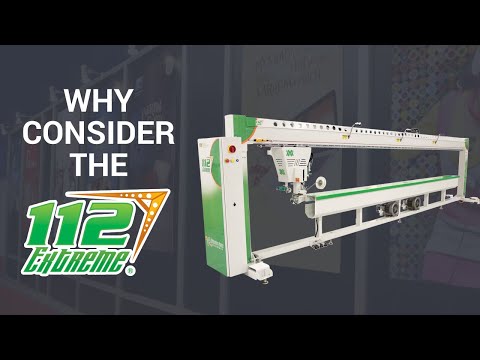
Automated production welders with material tracking and guided feed systems maintain consistent pressure and heat application across the full seam length regardless of material weight. The 112 Extreme is designed specifically for welding, cutting, and grommeting long, straight seams in grand-format applications and is widely used in automated welding for banners, posters, and billboards.
Silicone Edge Graphics (SEG) Finishing
Silicone edge graphics (SEG) is one of the fastest-growing applications in sign finishing. SEG fabric graphics feature a silicone bead sewn or welded around the perimeter of the print — the bead snaps into a grooved aluminum frame channel to create a clean, tensioned, frameless-looking display. The finish quality of the bead is critical: an inconsistent or poorly attached bead creates visible imperfections in the final display.
Automated SEG finishing machines produce consistent bead attachment across the full perimeter of a graphic, eliminating the variability of hand-sewing and reducing skilled labor requirements. SEG is used extensively in retail environments, trade show displays, airport signage, and anywhere a premium, professional appearance is required.
Trade Show Displays and Event Signage
Trade show and event signage presents a specific set of finishing requirements: graphics must be durable enough to handle repeated installation and removal, pack well for transport, and look flawless at close-viewing indoor distances. Unlike outdoor signage where weatherproofing is the priority, indoor trade show finishing prioritizes appearance — clean seams, consistent tension, and no visible finishing artifacts, all of which support the overall importance of signage in advertising and branding.
Welded hems and SEG finishing are both common in trade show production. The choice depends on the display system the graphic is designed for. For example, a portable tension-frame booth graphic may use SEG for a wrinkle-free fit, while a compact pop-up display can rely on welded hems for fast setup and repeated packing. Fabric graphics for pop-up and tension-frame displays typically use SEG or welded hems; rigid backwall graphics use different finishing requirements entirely.
Pole Banners, Street Banners, and Municipal Signage
Pole banners for municipal and street-level display applications face some of the most demanding conditions a finished banner will encounter: sustained wind load, UV exposure, and repeated seasonal installation and removal. Municipal customers and sign program managers increasingly specify welded pole pockets — not sewn — because welded construction provides demonstrably superior wind resistance.
Welded pole pockets on heavy blockout vinyl hold up better to sustained wind than tape or standard sewing on comparable material.
How to Choose the Right Sign Finishing Machine: A Buyer's Guide
Choosing the right banner welding machine comes down to four factors: your production volume, the materials you run, the output types you finish, and your budget for automation. Working through these four inputs systematically will narrow the field from every machine on the market to the two or three that actually fit your shop.
Step 1: Assess Your Monthly Banner Volume
Production volume is the key factor in choosing a machine, with handheld or entry-level welders suited for under 200 banners/month, automated single-function welders ideal for 200–1,000 banners/month, and high-speed automated systems best for over 1,000 banners/month.
Step 2: Identify Your Primary Materials
Matching the welding method to your primary materials ensures strong, durable seams without damaging the print. Hot air and hot wedge welding suit standard vinyl and blockout, while mesh requires sewing, and PVC-coated fabrics use hot air or RF welding depending on seam visibility.
Step 3: Map the Output Types You Produce
Before selecting equipment, list every finishing output your shop produces, including expected weld widths, to ensure your machine handles all job types like standard hems, pole pockets, grand-format seams, SEG bead attachment, mesh finishing, and trade show graphics.
Step 4: Evaluate Automation Level vs. Budget
Automation level affects both capital cost and labor per banner, with three tiers: handheld/manual for low volume and high labor, table-mounted semi-automated for moderate investment and reduced labor, and fully automated feed-through for high volume and minimal labor. Miller Weldmaster offers financing to help shops afford higher automation levels with faster payback.
Step 5: Consider Service, Training, and Support
Miller Weldmaster offers comprehensive support including on-site installation, training, and ongoing service to ensure smooth operation and minimize downtime. This reliable support infrastructure makes their equipment a better long-term investment compared to unsupported alternatives.
What Sign Shops Say: Real Results from Miller Weldmaster Customers
Miller Weldmaster, founded in 1974, serves sign shops, print providers, and large-format manufacturers worldwide. The performance claims for banner welding equipment are not theoretical — they are backed by what shops report when they make the switch.
Production Speed Improvements
The speed improvement sign shops report when switching from sewing to automated welding is consistent. Sewing a standard banner takes a skilled operator 4 to 7 minutes. An automated banner welder finishes the same banner in 1 to 3 minutes — and maintains that pace across an entire production run without fatigue, thread changes, or tension adjustments.
At a production volume of 500 banners per month, that speed difference represents roughly 8 to 50 freed labor hours per month. Applied to other production tasks or sales-generating activity, that recovered capacity is one of the clearest ROI levers in the equipment business case.
Durability Outcomes in Real-World Conditions
The durability advantage of welded seams over tape and sewing shows up in the field.
Shops that have switched to welded seams consistently report the same outcome: significantly reduced banner returns, fewer customer complaints about edge failures, and banners that perform in conditions where tape and sewing-finished products would have failed. One sign shop reported an 80% reduction in banner returns after switching to welded seams, illustrating the impact of hot air welding technology for durable seams.
Ready to Upgrade Your Sign Finishing Operation?
Miller Weldmaster has built fabric welding machines since 1974, including sign finishing and banner welding machines. Our equipment is in production sign shops, large-format print providers, and billboard manufacturers worldwide. Whether you are transitioning from tape for the first time or scaling a production line to handle thousands of banners a month, we have a machine built for your application.
Miller Weldmaster sign finishing machines include:
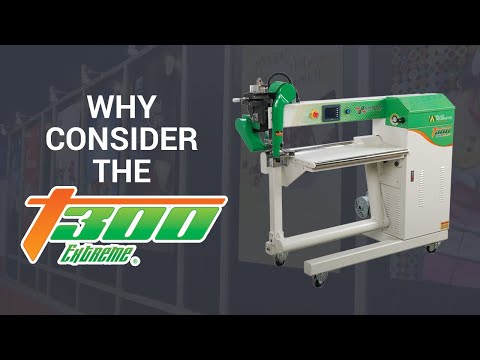
- T300 Edge: hot wedge banner and sign edge welder that can finish a 4 x 6 banner in under one minute
- T300 Flex: hot air and hot wedge welder for shops that run varied materials
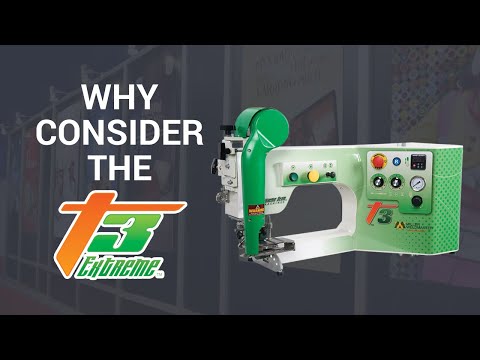
- T3 Extreme: compact hot wedge welder
- DH7600 Double Hemmer: dual-edge finishing machine with hot air and hot wedge
- HG50: hot air welder that welds, grommets and cuts
- 112 Extreme: hot air welder for long, straight seams on grand-format graphics
- Ecco Sheet System: automated billboard finishing system
- RFlex and RFlex Travel: radio frequency welders for PVC and PU fabrics, the Travel model for large-scale work
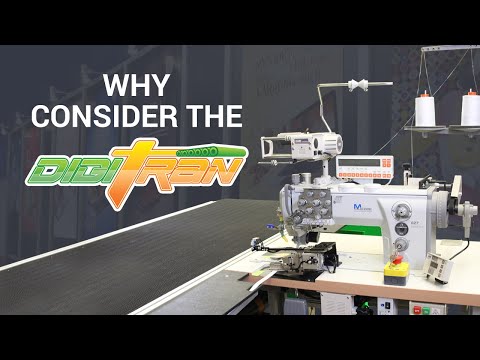
- Digitran: automated sewing machine for banners and SEG graphics
- EliteAir Industrial: handheld hot air welding tool
See every sign machine in the machine finder.
Tell us about your production volume, materials, and finishing requirements — our team will recommend the right solution and show you what the ROI looks like for your shop.